

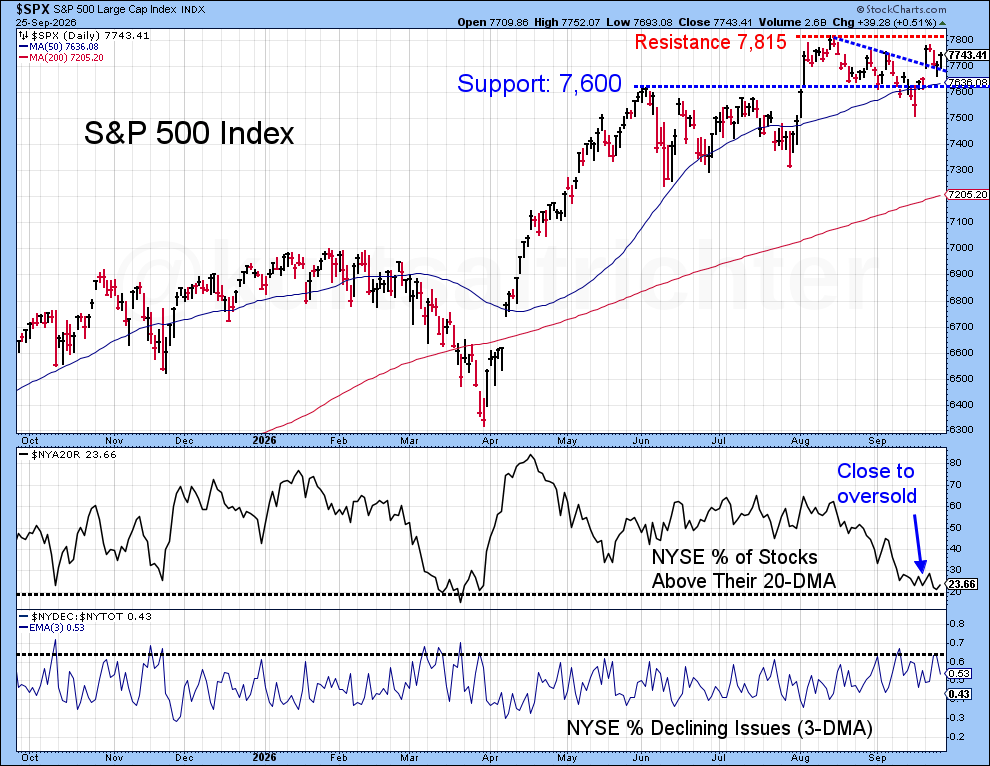
The S&P 500 closed at 7,743, less than 1% below its August record of 7,815. Underneath the index, most stocks are struggling. Only 24% of stocks on the New York Stock Exchange are trading above their average price of the past month, so a handful of giant companies are carrying the index. The last time that figure fell this low, in late March, stocks bottomed for the year within days. You do not want to be short this market.
This week, the U.S. government sold $70 billion of 5-year Treasury debt at a 5.03% yield, the highest for that sale since 2006. The group of buyers that includes foreign central banks and other overseas investors took 54% of it, well below its usual 65% share.
For decades, foreign countries have taken the dollars they earn selling goods to the U.S. and parked them in Treasury bonds, which helped hold U.S. borrowing costs down. When they step back, the bonds still have to be sold and someone has to buy them. The big Wall Street banks that are required to bid at every Treasury sale absorb the leftovers, and they only do it at a higher interest rate.
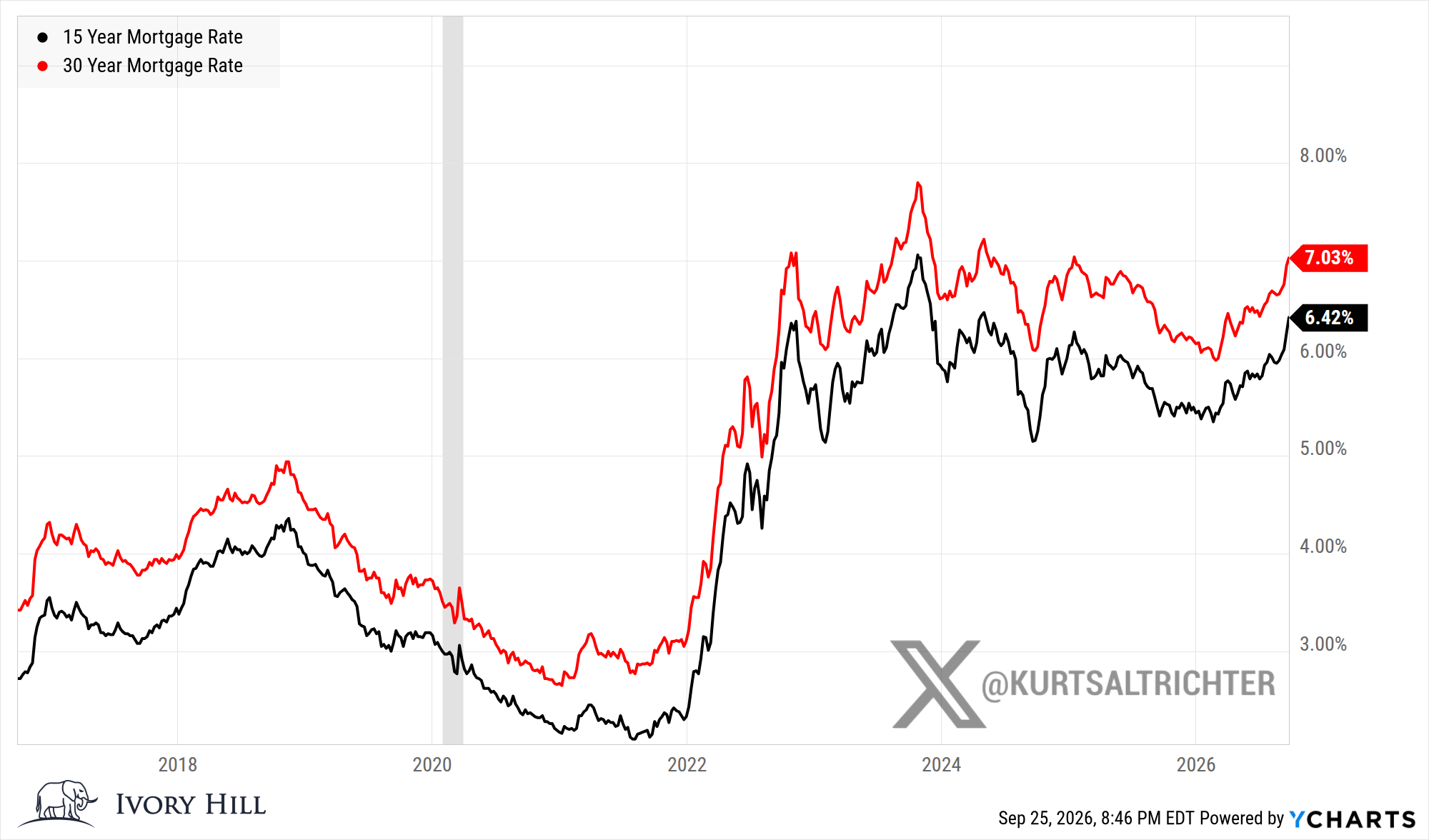
That higher rate then resets borrowing costs for everyone. It flows into mortgage rates, which hit 7.03% this week, their highest since 2024, and it raises what businesses pay to borrow.
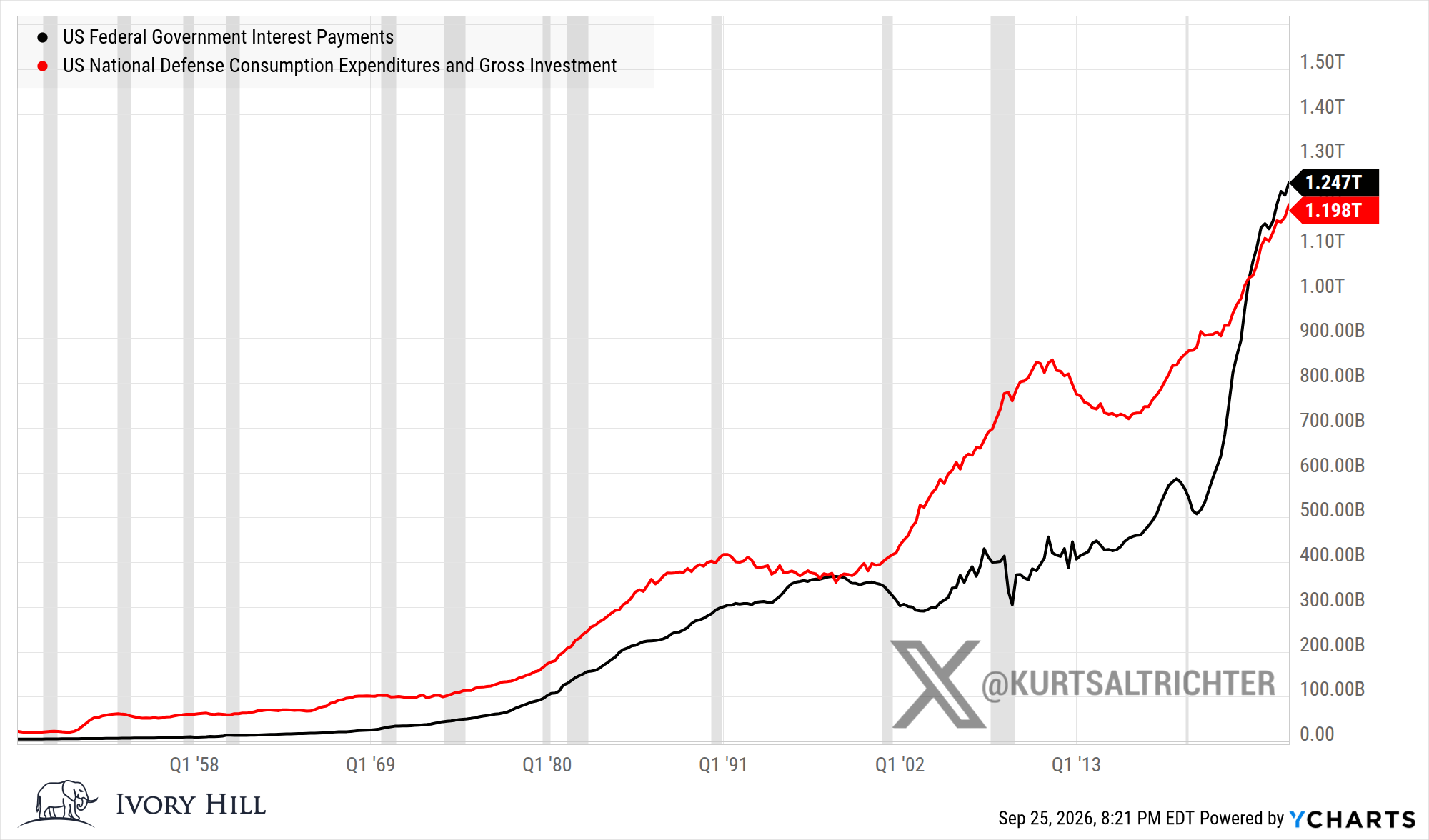
The government pays that higher rate too. U.S. now spends more on interest on the national debt than it does on the military. Higher rates raise the interest bill on the national debt, which widens the deficit and forces the government to sell even more bonds into a market that already lacks buyers. Treasury is already leaning against this: this week it tripled the amount of its own long-term bonds it will buy back, to $6 billion, to keep long-term rates in check. If foreign demand keeps fading, the buyer of last resort is the Fed. When the Fed buys Treasury bonds, it does so with newly created money, and that money printing is what debases the dollar.
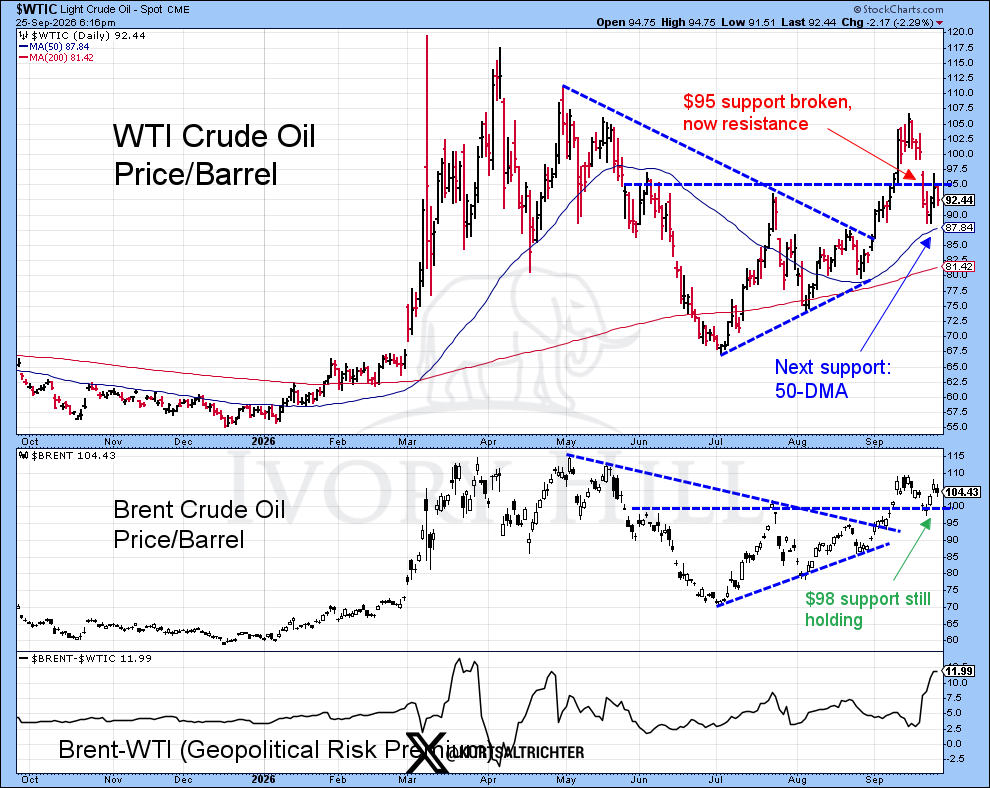
The Fed raised rates last week partly because high oil prices were pushing up prices across the economy. Since then, U.S. crude oil has fallen below $95 a barrel, a level that had held as a floor, and closed at $92.44.
Brent, the global oil benchmark, is still holding near $104. That left it $11.99 a barrel more expensive than U.S. oil, the widest gap since March. The extra premium largely reflects the risk to tankers moving through the Strait of Hormuz, since Brent competes directly with Middle East supply on the water. U.S. oil still moves with global prices, but because it doesn’t depend on that route, it carries much less of that risk. A rate hike does not produce a single barrel of oil, and an oil shock that is starting to fade justifies neither last week’s hike nor a second one.
How bonds, oil, and stocks are connected right now
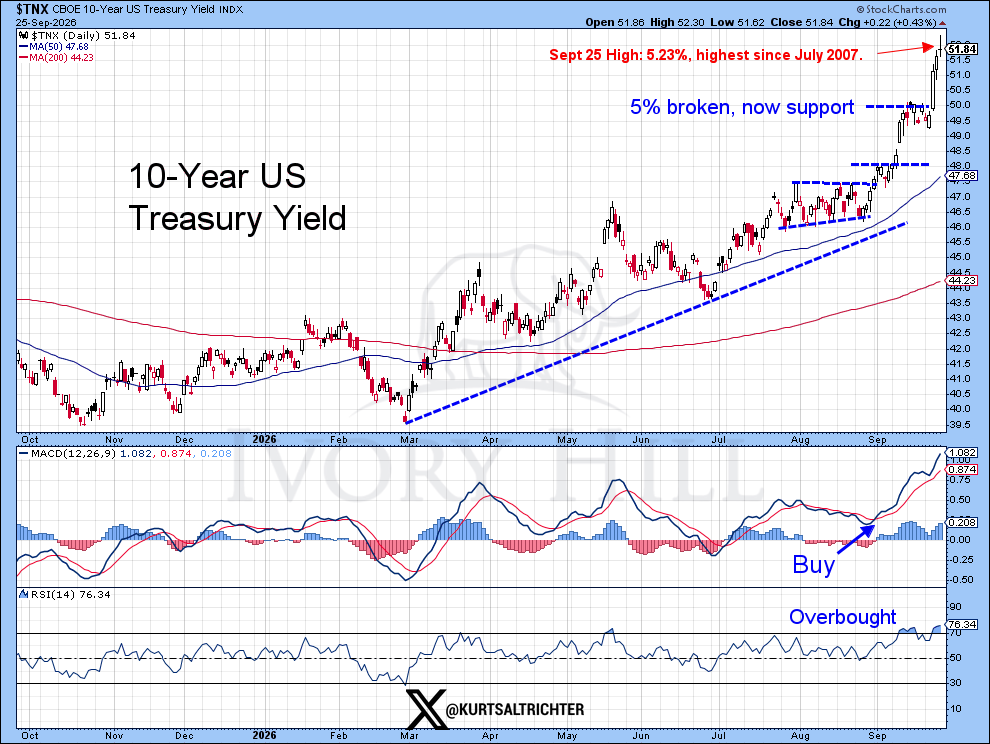
For most of September, all three markets moved together. Oil prices rose, investors bet the Fed would raise rates again, and the 2-year Treasury rate, which tracks where the Fed is headed, jumped to 4.89% on Sept 23, its highest since May 2024. Higher rates triggered some investors to pull money out of stocks, because a guaranteed 5% from the government is a better risk/reward ratio than taking on systemic risk in stocks right now.
On Friday, that pattern broke. U.S. oil dropped 2.29% on hopes the Strait of Hormuz reopens, and the S&P 500 rose 0.51%. The 10-year rate, however, did not follow oil lower and closed slightly higher at 5.18%.
For your portfolio, this means falling oil helps stocks and short-term rates, but it will not bring mortgage rates or long-term bond rates down on its own. A lasting rally in stocks needs the 10-year rate back below 5%. Until then, rallies depend on oil headlines and earnings.
Next week: the September jobs report (Friday, Oct 2)
As of Sept 23, markets saw a 66% chance the Fed raises rates again in October, up from under 10% in late August. A strong jobs number gives the Fed cover for a second hike and likely pushes the 10-year rate above 5.25%. A weak number opens the door for rates to pull back toward 5%, which would give mortgage rates their first relief in weeks and give the broader stock market room to recover. That recovery is what would take the S&P 500 past its 7,815 record high and to 8,000. Time will tell. Lots of uncertainty out there right now.
And remember - The one fact pertaining to all conditions is that they will change.
Follow me on X for more updates.
Best regards,
-Kurt
Schedule a call with me by clicking HERE
Kurt S. Altrichter, CRPS®
Fiduciary Advisor | President
Disclosure
The RiskSignal Report is published by Ivory Hill, LLC. All opinions and views expressed in this report reflect our analysis as of the date of publication and are subject to change without notice. The information contained herein is for informational and educational purposes only and should not be considered specific investment advice or a recommendation to buy or sell any security.
The data, models, and tactical allocations discussed in this report are designed to illustrate market structure and positioning trends and may differ from portfolio decisions made by Ivory Hill, LLC or its affiliates. Investing involves risk, including the possible loss of principal. Past performance is not indicative of future results.
Ivory Hill, LLC, and its members, officers, directors, and employees expressly disclaim any and all liability for actions taken based on the information contained in this report.