

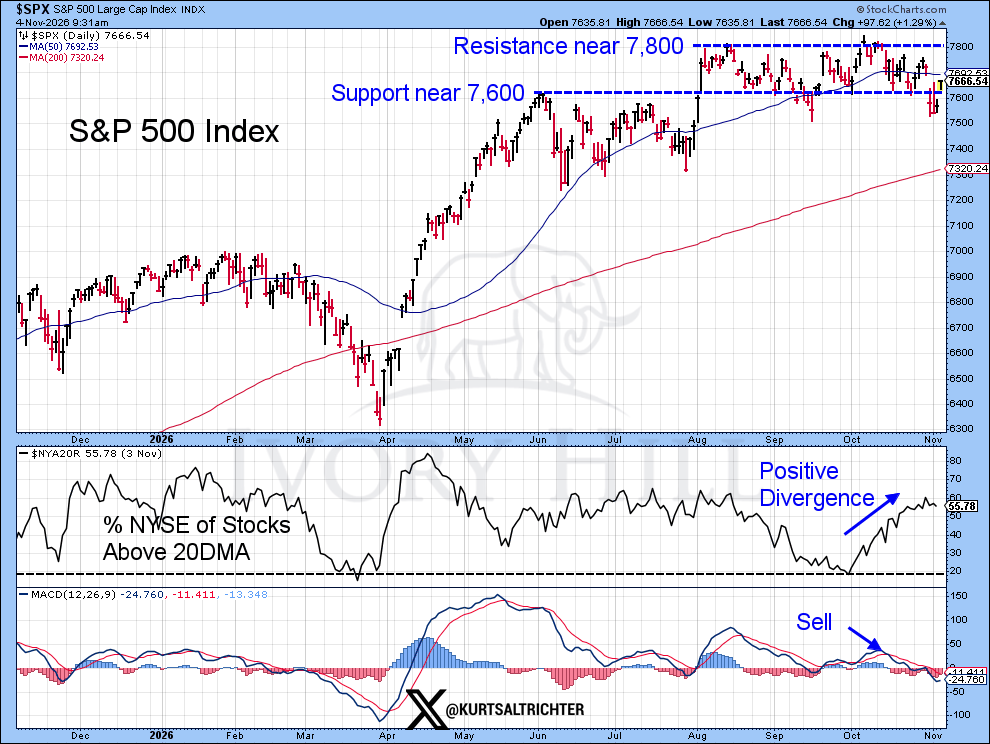
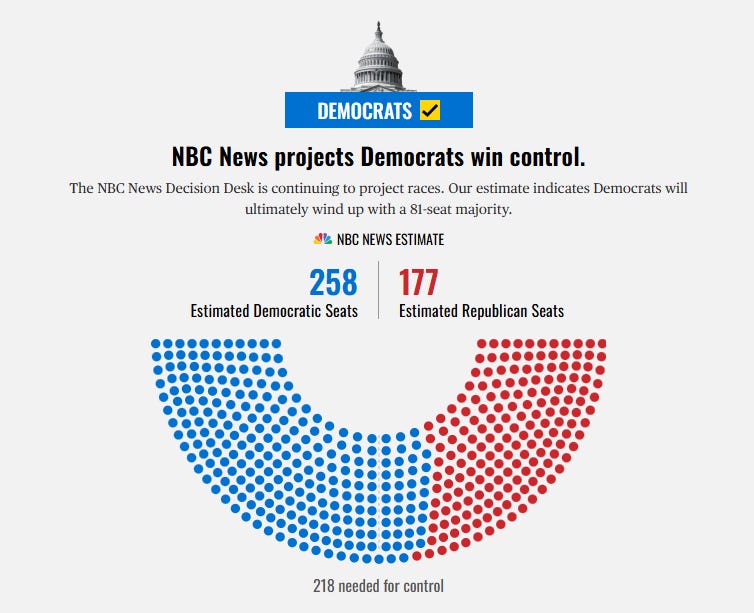
Democrats won the House by a solid margin and took the Senate with a comfortable majority, while the White House stays Republican. That gives us a divided government, and the market likes it, which is why stocks are rallying this morning.
Why gridlock is bullish right now
The economy is running on strong consumer spending, low unemployment, and a massive buildout of AI data centers. When neither party can push sweeping legislation through, Washington can’t throw a wrench into that engine, so the market gets to keep doing what it’s already doing. With the election behind us, there’s less uncertainty today than there was yesterday, and I expect investors to start deploying capital more aggressively as a result.
Ignore the scary policy headlines
I would bet money that you’ll start seeing plenty of articles about capping credit card rates, data center moratoriums, and other proposals from the new Congress. Remember, democrats did not win a veto-proof majority in either chamber, so they can’t override the President, and that keeps the odds of industry-shaking legislation near zero for the next two years.
What will go up is the noise: government shutdowns, debt ceiling fights, congressional investigations, subpoenas, and impeachment threats. These will dominate the news cycle and can trigger short bursts of volatility, but history shows they don’t leave a lasting mark on stocks because they don’t change corporate earnings.
The numbers to know
From 1950 to 2025, the S&P 500 averaged a 3.0% gain in midterm Novembers, compared with 1.8% in non-midterm Novembers.
Since 1974, the index has averaged a 5.7% return in the three months after midterms (positive 85% of the time) and a 12.4% return in the six months after (positive 100% of the time).
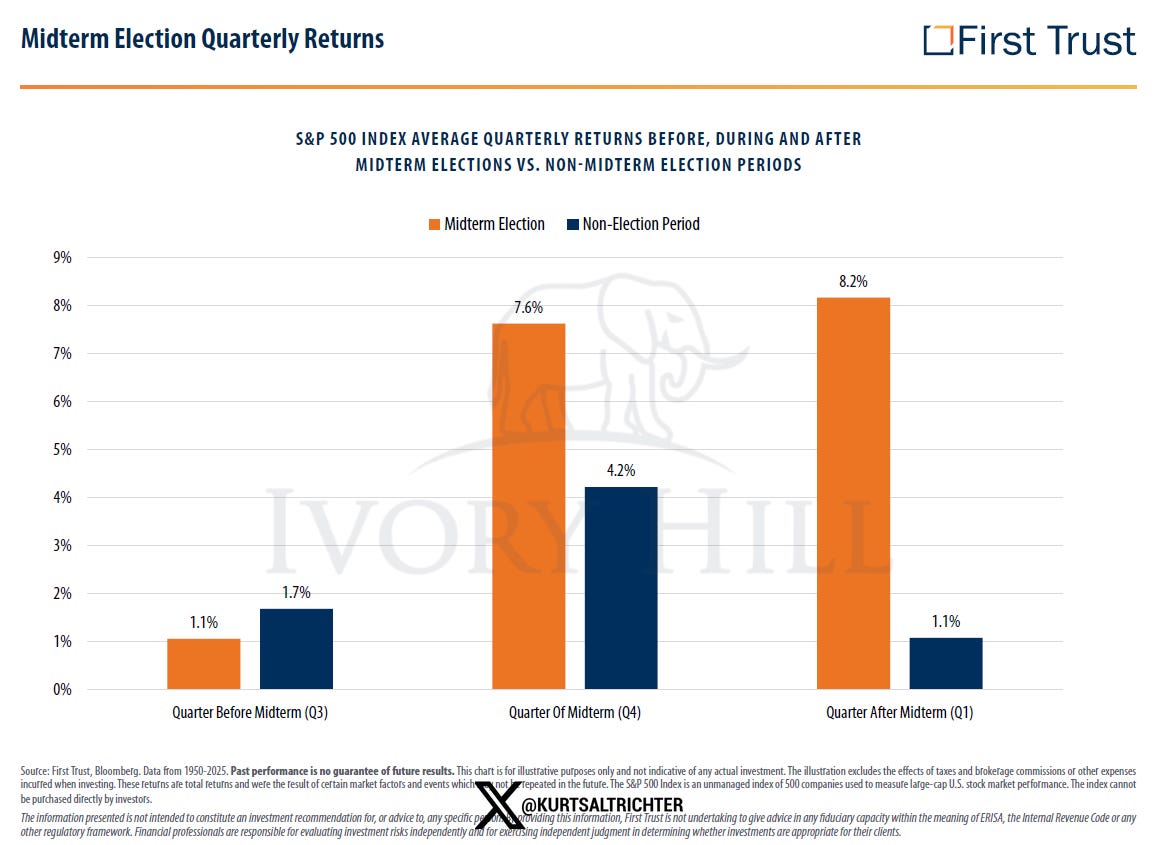
From 1950 to 2025, the S&P 500 averaged 7.6% in Q4 of midterm years versus 4.2% in non-election periods, then 8.2% in the following Q1 versus just 1.1%. The two quarters we’re entering now have historically been the strongest back-to-back stretch of the cycle.
Every midterm since 1950 has been followed by a positive 12-month return, averaging 18.8% through 2024, and the 11 months after a midterm November averaged 17.0% from 1950 to 2025, more than double the 8.1% non-midterm average.
Going back to the 1880s, a divided government under a Republican president has followed 14 midterms, more than any other outcome, and stocks averaged an 18% return over the next 12 months, positive 93% of the time.
Where I’d look for extra upside
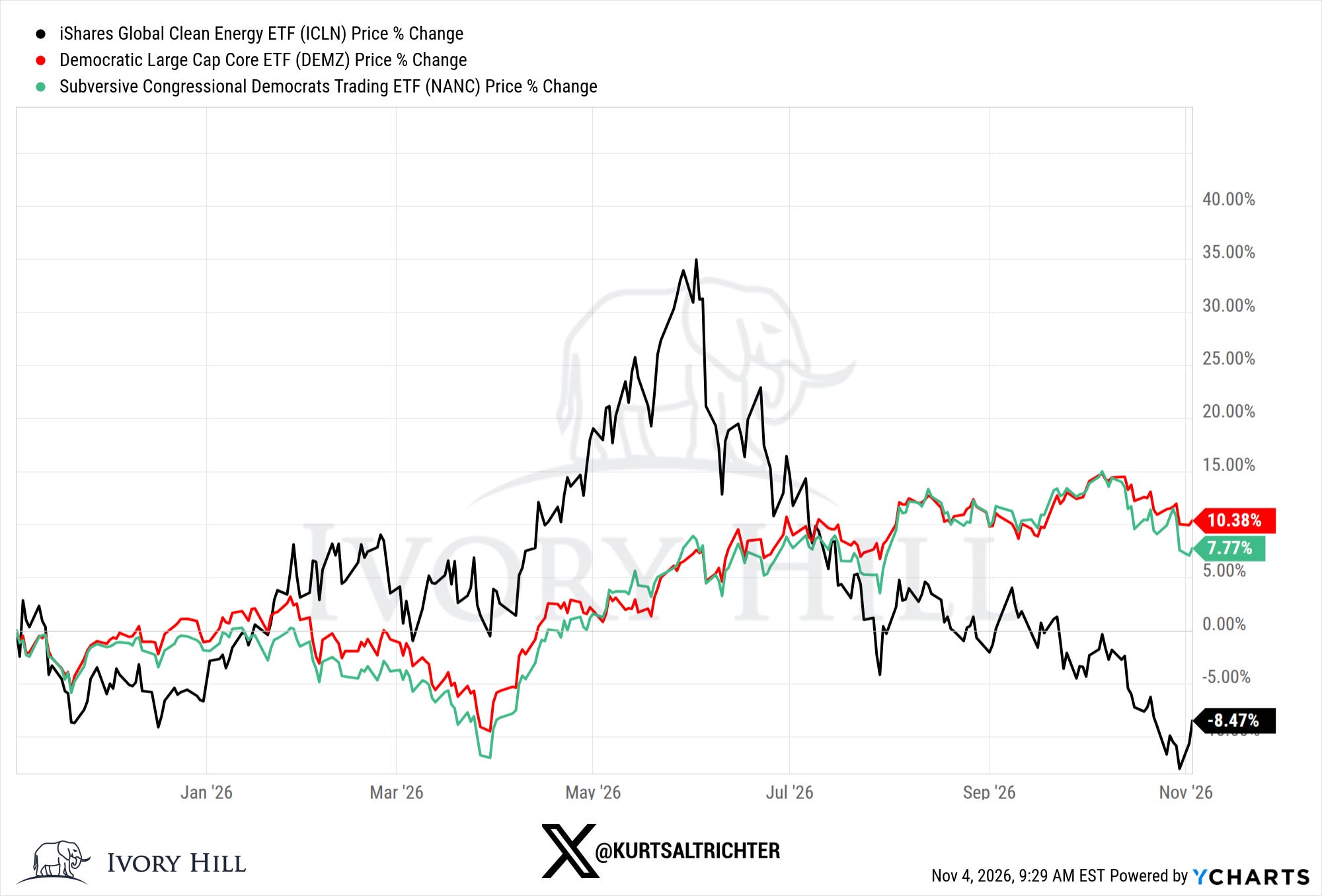
Clean energy. A Democratic Congress will push for green subsidies and climate mandates, and even though gridlock limits what passes, that pressure supports sentiment in the sector. Clean energy also performed well during both Trump terms, which tells you the trend has legs beyond Washington. ICLN covers solar, wind, hydro, and biomass. DEMZ and NANC, which track Democratic-aligned and congressional Democrat holdings, are also worth a look.
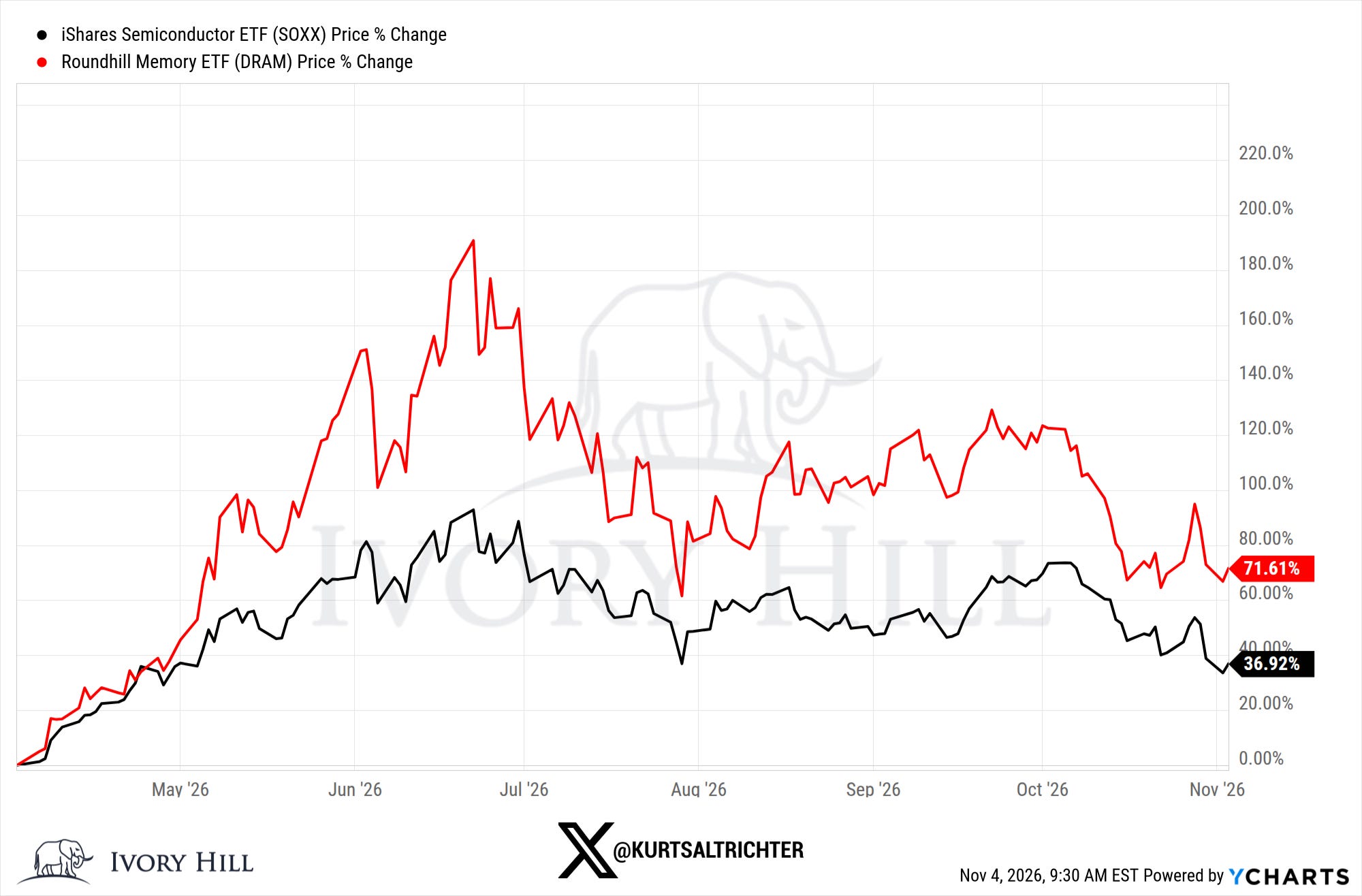
AI infrastructure on a dip. Fear of Democrats cracking down on data centers could keep pressure on chip and memory names. If that selling gets heavy in SOXX and DRAM, I’d treat it as a buying opportunity. The data center backlash was useful as a campaign issue, and with the votes counted, its political value drops fast.
These are satellite ideas for aggressive investors, not core holdings.
Bottom line: Divided government means gridlock, and gridlock has historically been good for stocks. Tune out the Washington noise and stay invested.
And remember - The one fact pertaining to all conditions is that they will change.
Follow me on X for more updates.
Best regards,
-Kurt
Schedule a call with me by clicking HERE
Kurt S. Altrichter, CRPS®
Fiduciary Advisor | President
Disclosure
The RiskSignal Report is published by Ivory Hill, LLC. All opinions and views expressed in this report reflect our analysis as of the date of publication and are subject to change without notice. The information contained herein is for informational and educational purposes only and should not be considered specific investment advice or a recommendation to buy or sell any security.
The data, models, and tactical allocations discussed in this report are designed to illustrate market structure and positioning trends and may differ from portfolio decisions made by Ivory Hill, LLC or its affiliates. Investing involves risk, including the possible loss of principal. Past performance is not indicative of future results.
Ivory Hill, LLC, and its members, officers, directors, and employees expressly disclaim any and all liability for actions taken based on the information contained in this report.