

As the market expected, the Fed hiked rates last week. First hike since 2023, by 0.25%.
I think this was a policy mistake, as raising rates does not impact the price of oil. Strip out the war, and the Fed has no case to hike at all. Energy alone drove nearly 40% of August’s CPI increase, and energy is only 7.47% of the entire basket. That’s the part most news outlets skipped past to get to the scary headline number.
The Fed just raised rates into a number that could sit well below 3% within two or three months of a ceasefire. Call it what it is: a policy mistake with a countdown clock attached.
The economy isn't too hot, and the money supply hasn’t increased substantially. Like I’ve said before: the only thing that actually creates inflation is the government printing money. Everything else is anecdotal at best.
One hike doesn’t end a bull market. A rate-hiking cycle will
I am still bullish on stocks here. Go back and look at every real bear market. 2000. 2008. 2022. None of them happened because the Fed raised rates once. They happened because the Fed raised rates repeatedly and held them there until we had a credit event that ultimately crashed stocks.
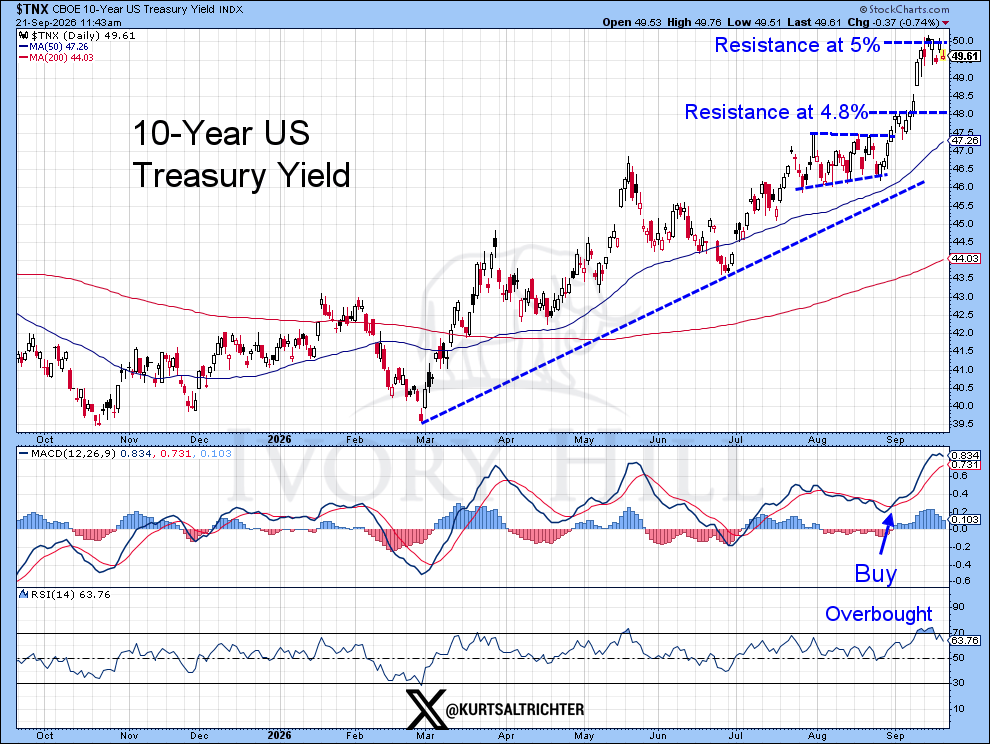
We are now one hike in. The Fed’s own dot plot points to maybe one more hike this year. I don’t think we will get there because I think this inflation is transitory. On that, the problem with Powell using the word transitory is that he never defined how long transitory was, so I will define it here. I think CPI trends north until we see the reciprocal strikes stop, oil flowing through the Straight of Hormuz, and real progress toward a lasting ceasefire. We don’t necessarily need Trump to get a deal done.
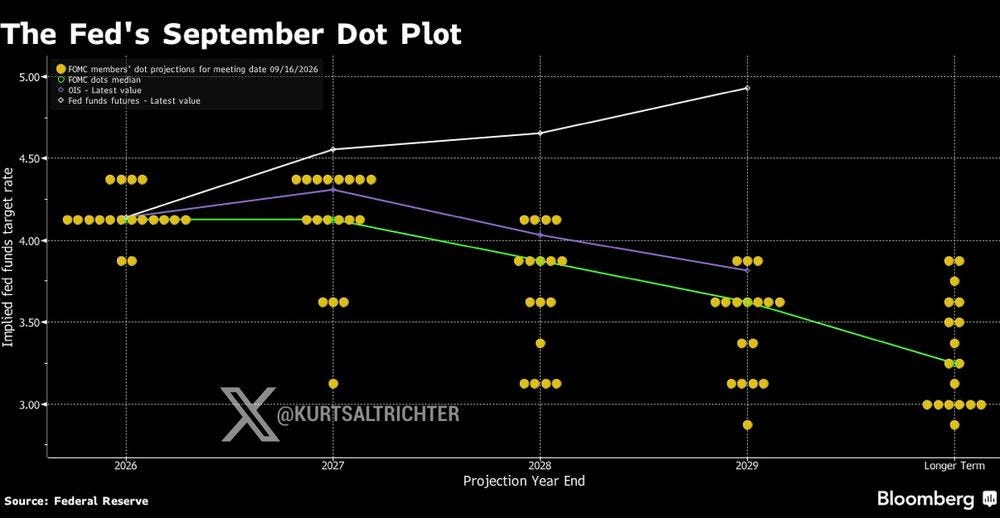
What Breaks This Market Standoff?
Stocks slipped last week on the same story we keep coming back to: oil up, yields up. For over a month now, the S&P 500 hasn’t gone anywhere. It’s stuck between two forces pulling in opposite directions.
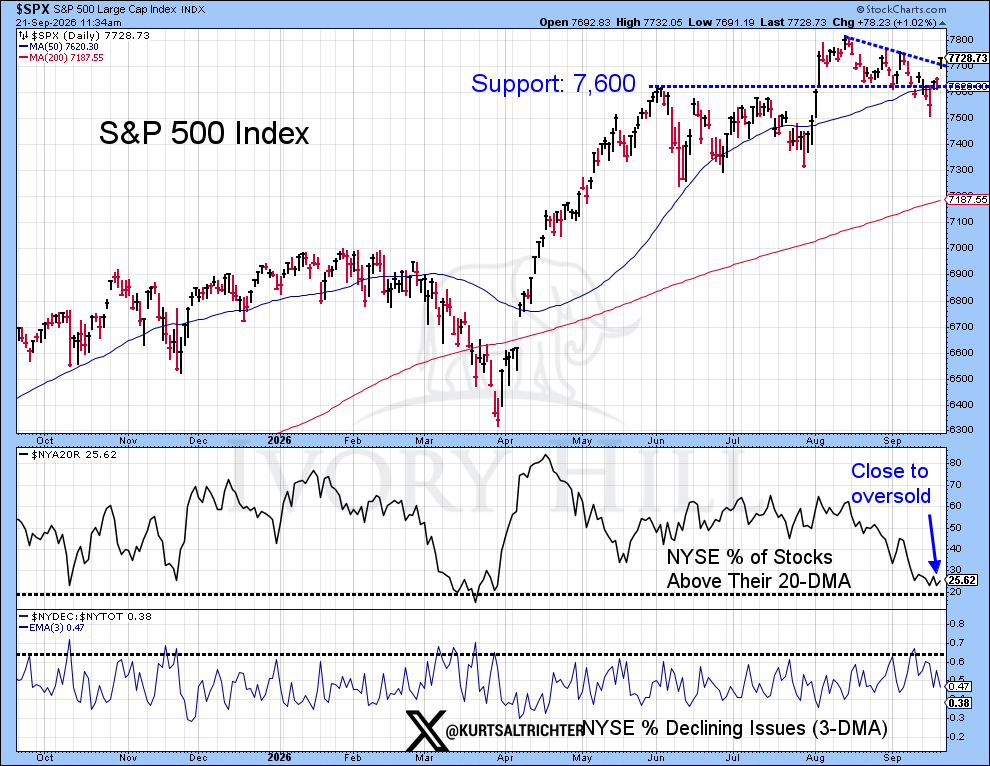
The bullish pull: historically strong earnings growth, a still-solid economy, and valuations that aren’t crazy once you look at 2027 expected EPS.
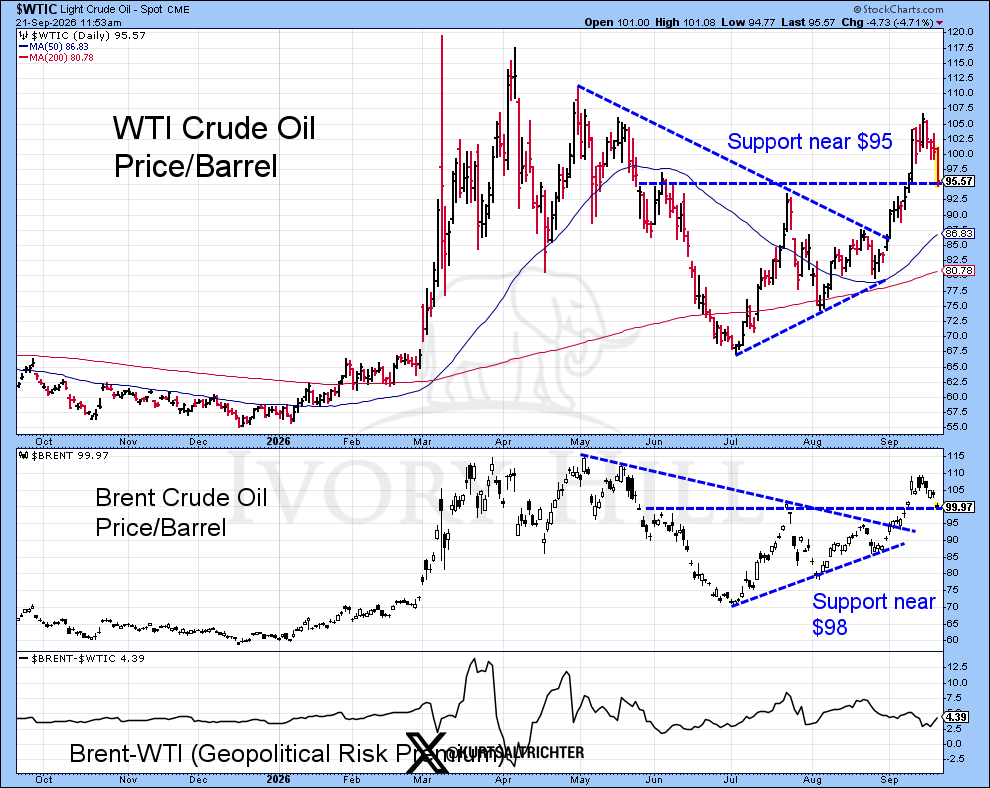
The bearish pull: oil at multi-year highs, Treasury yields at multi-year highs, a war that isn’t resolved, and a growing question of whether AI capex turns into real returns or just a pile of spending.
Neither side is clearly winning. These two forces have this market locked in a stalemate, and I want to walk through what sequence of events actually breaks it, either bullish and back to new highs, or bearish and into a real pullback.
Here’s what actually breaks the tie.
Bullish break: oil flows increase out of the Gulf. This doesn’t require a ceasefire. Nobody needs Iran and the US to sign a peace deal. What the market needs is more oil actually moving, through Hormuz, through the East-West pipeline, past the Bab el-Mandeb without getting shot at. The war can keep going. Markets don’t care about the war ending. They care about oil flowing. The second that headline hits, Brent likely drops back toward $80, the 10-year likely drops back into the mid-4% range, and the entire headwind holding this market back disappears fast. Then investors go back to pricing in the good stuff: earnings, a solid economy, inflation actually cooling and the Fed cutting rates.
Bearish break: the economy starts to crack. The market has held up because the good news has been strong enough to outrun the bad news. This won’t last forever. We’re heading into month seven of high energy prices and year six of elevated inflation. At some point, that shows up in real economic data, not just in a CPI report. If the labor market starts softening at the same time prices stay high, that’s the combination that actually breaks this stalemate to the downside, and it breaks it hard and fast.
The US economy is strong right now. But strong isn’t the same as immune. The longer this drags on, the higher the odds it eventually slows. There’s no sign of that happening yet. That can change fast, and anyone who’s traded through a cycle knows it.
This market will break one way or the other. It has to. This week, the UN General Assembly gives Washington and Tehran a real shot at some diplomatic movement. If that happens, expect oil and yields to fall and stocks to rally. If it doesn’t, and the strikes keep coming, expect new short-term lows.
Higher long-term rates hit stocks too.
When Treasury yields rise, it costs companies more to borrow, and that eats into profit. Real estate gets hit hardest here, since that business runs almost entirely on borrowed money.
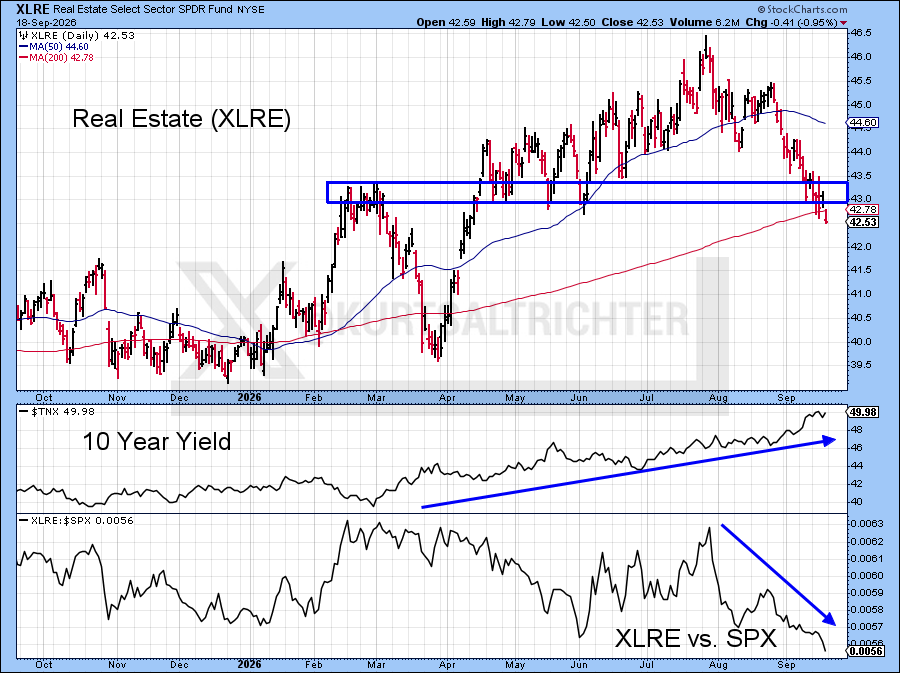
Other sectors get hurt for a different reason. Consumer staples and utilities aren’t bought for growth. Investors buy them for the dividend. When Treasury yields rise, that dividend has to compete with a government bond paying more for less risk.
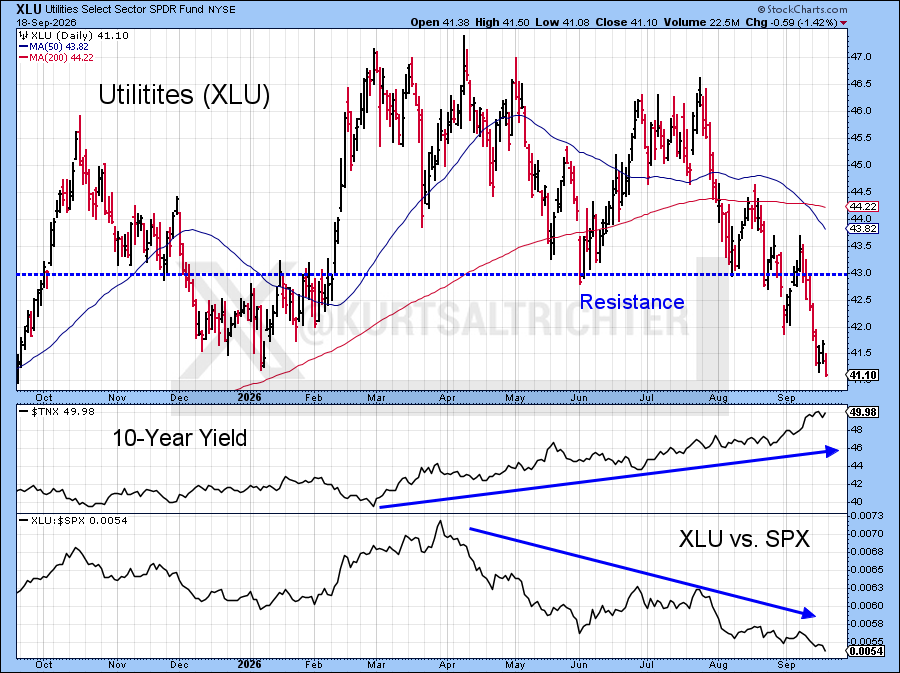
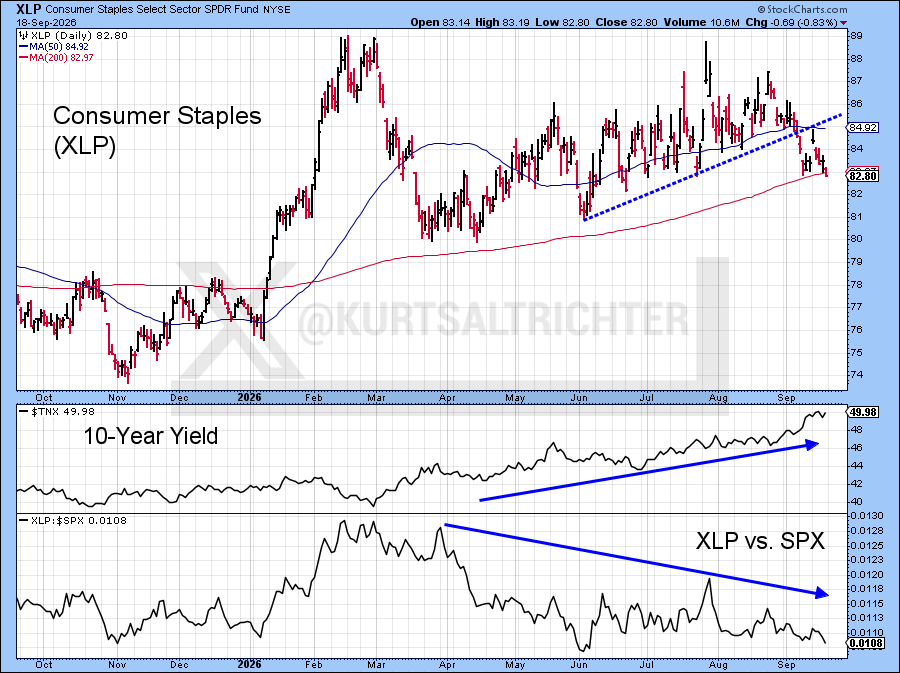
I’d underweight these sectors over the medium term. That cuts your portfolio’s sensitivity to rising rates. And yes, I am even talking to dividend investors, with your “bulletproof” dividend stock portfolio, wondering why you’re in the red for the year while the index is up.
Now, let’s put our macro and intermarket analysis hat on here. What do rising rates mean for the dollar? If you know which direction the greenback is going, then you know where a lot of other things are going.
Rising rates tend to support the dollar. High yields make the dollar more attractive to global investors. To buy Treasuries and other USD assets, they have to buy dollars first. That extra demand lifts the exchange rate.
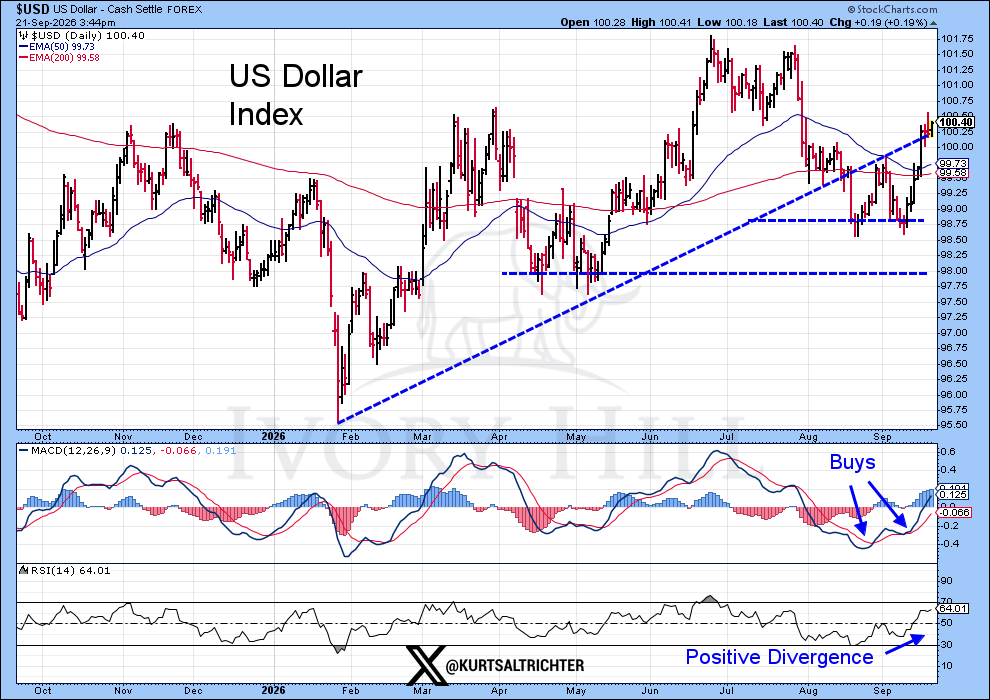
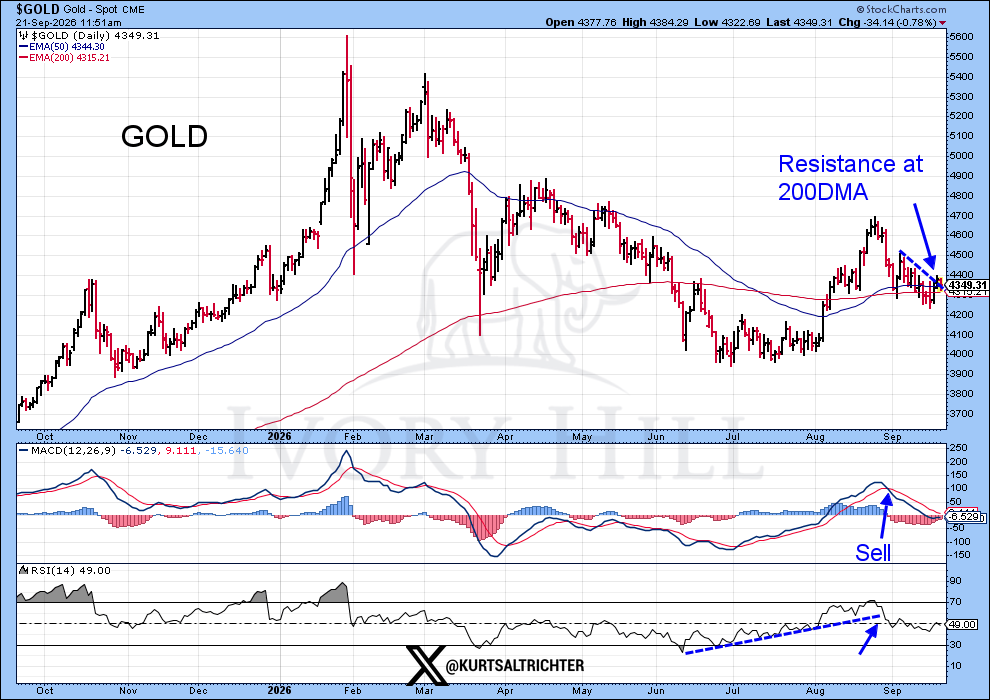
A stronger dollar and higher real yields are a headwind for gold.
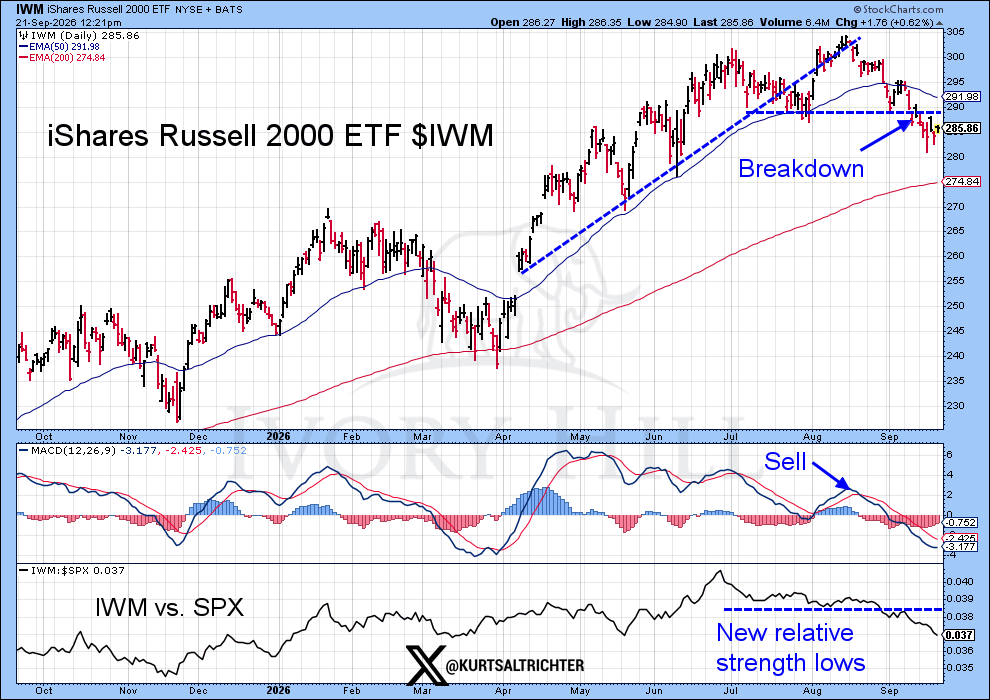
Small-caps have put in a bearish double top. I think the 200-DMA will likely provide strong support.
Where the Charts Are Pointing
Four groups stand out right now, not just for price action, but for relative strength, the ratio of the stock or sector against the S&P 500. When that ratio is rising, it’s outperforming the index. When price and relative strength both turn up together, that’s where the next leg of market leadership tends to come from.
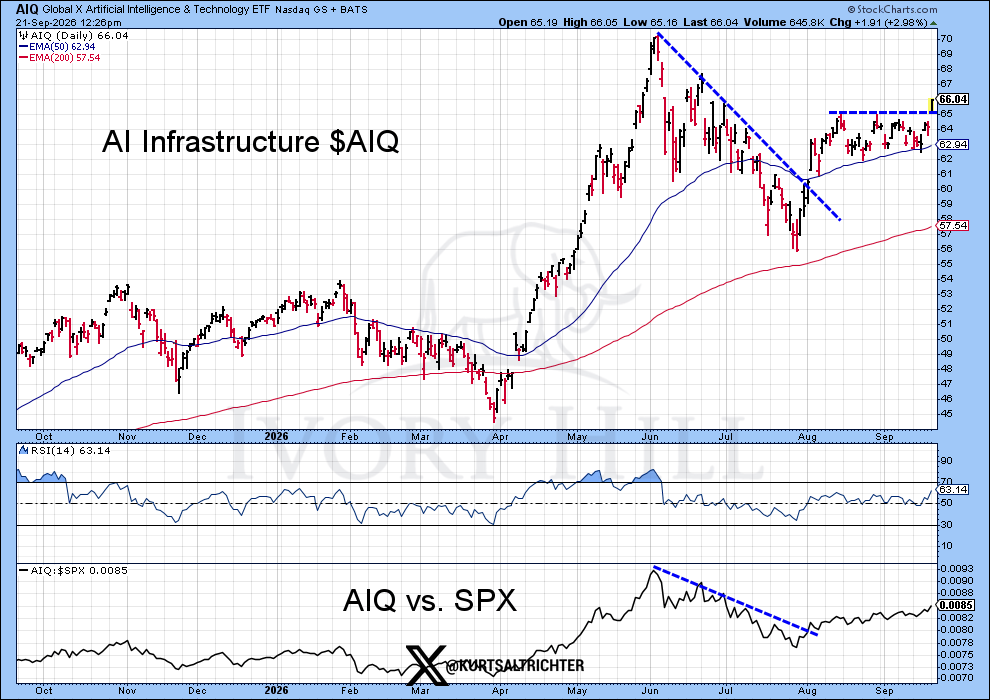
AI Infrastructure. Price broke its downtrend from the June high and is consolidating at resistance near $66. The relative strength line against the S&P just turned up after months of underperforming, meaning AI infrastructure is starting to lead again, not just ride the market higher.
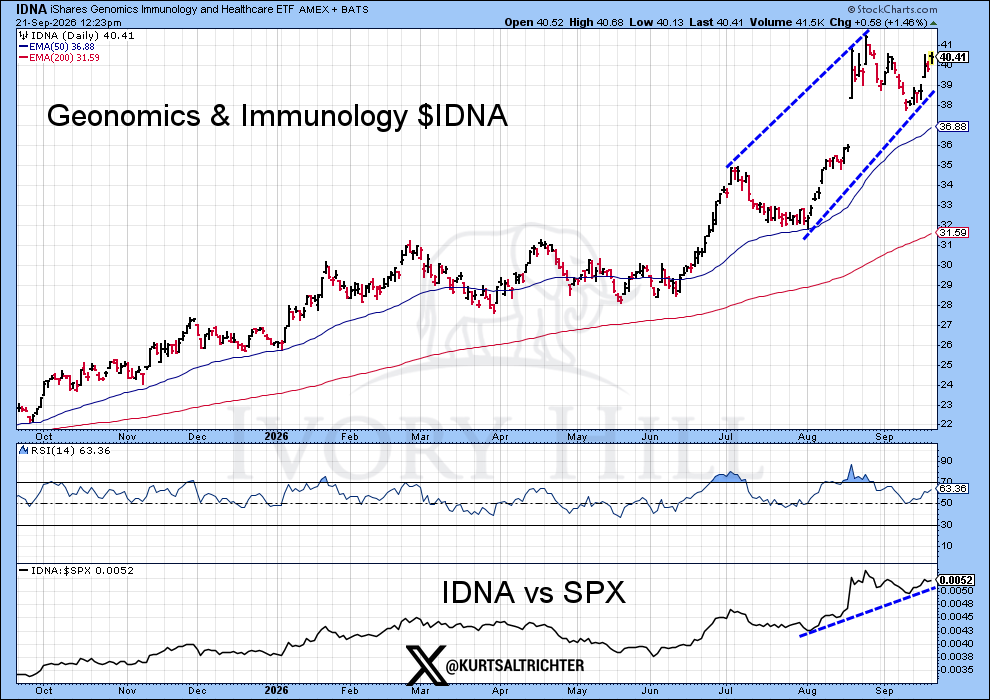
Genomics & Immunology. Clean uptrend, higher highs and higher lows, no sign of stalling. Relative strength against the S&P just broke out to a new high; this group is rising faster than the market.
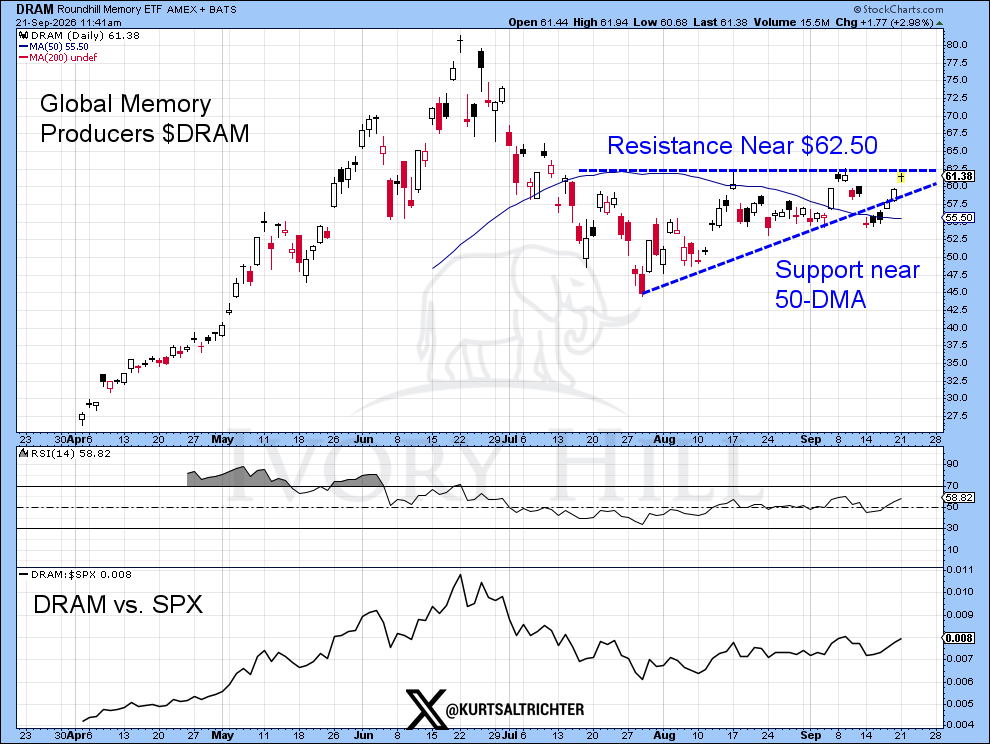
Global Memory Producers. Price is coiled into an ascending triangle, flat resistance near $62.50, rising support along the 50-day. A break above $62.50 confirms the next leg higher.
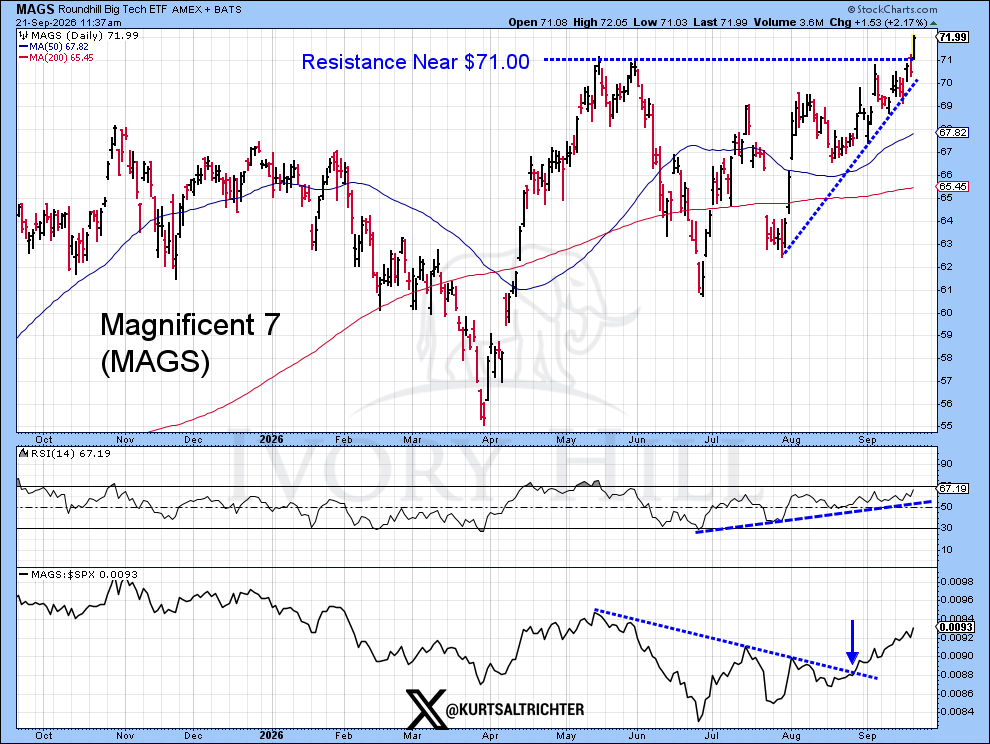
Magnificent 7. Price just broke above $71 resistance after testing it repeatedly since May. Relative strength against the S&P bottomed and is turning up, the first real sign mega-cap leadership is coming back after lagging most of the summer.
And remember - The one fact pertaining to all conditions is that they will change.
Follow me on X for more updates.
Best regards,
-Kurt
Schedule a call with me by clicking HERE
Kurt S. Altrichter, CRPS®
Fiduciary Advisor | President
Disclosure
The RiskSignal Report is published by Ivory Hill, LLC. All opinions and views expressed in this report reflect our analysis as of the date of publication and are subject to change without notice. The information contained herein is for informational and educational purposes only and should not be considered specific investment advice or a recommendation to buy or sell any security.
The data, models, and tactical allocations discussed in this report are designed to illustrate market structure and positioning trends and may differ from portfolio decisions made by Ivory Hill, LLC or its affiliates. Investing involves risk, including the possible loss of principal. Past performance is not indicative of future results.
Ivory Hill, LLC, and its members, officers, directors, and employees expressly disclaim any and all liability for actions taken based on the information contained in this report.