

“How’s the market doing?” is becoming an increasingly difficult question to answer, because it depends on which market you mean. The S&P 500 that most people watch is off its high and still falling. The equal-weight version (RSP) is off its high and climbing. Tech and communications stocks, where the AI trade lives, are down close to 5% so far in October, yet the S&P 500 Value Index (IVE) just hit a new all-time high. The headline index is sinking because a handful of AI giants are pulling it down, while the average stock is doing fine.
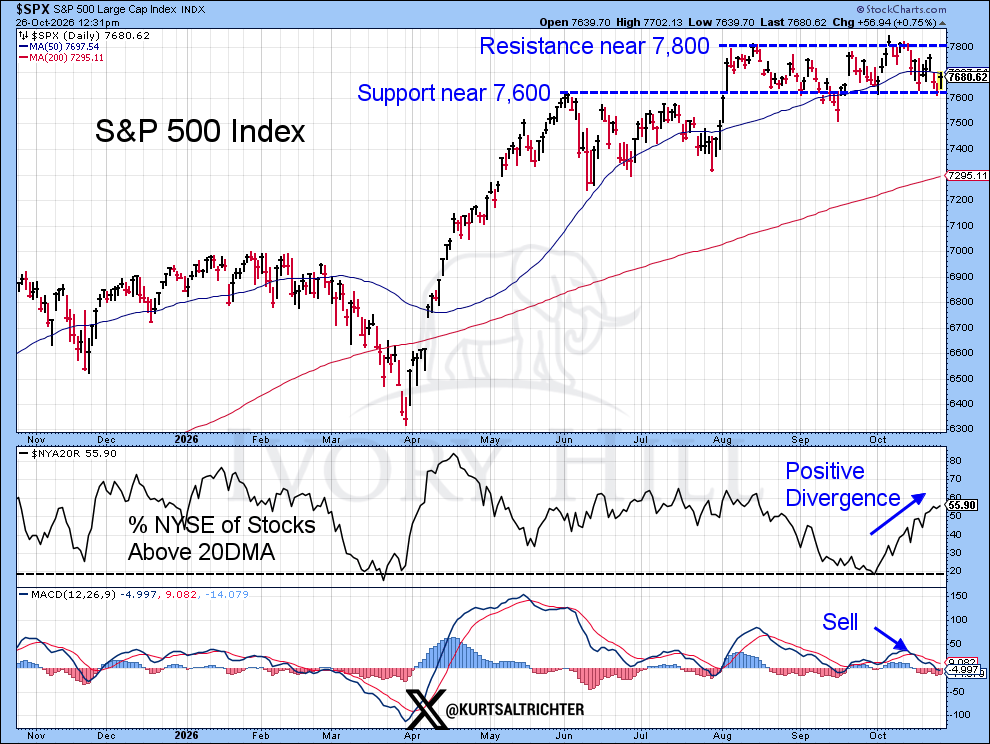
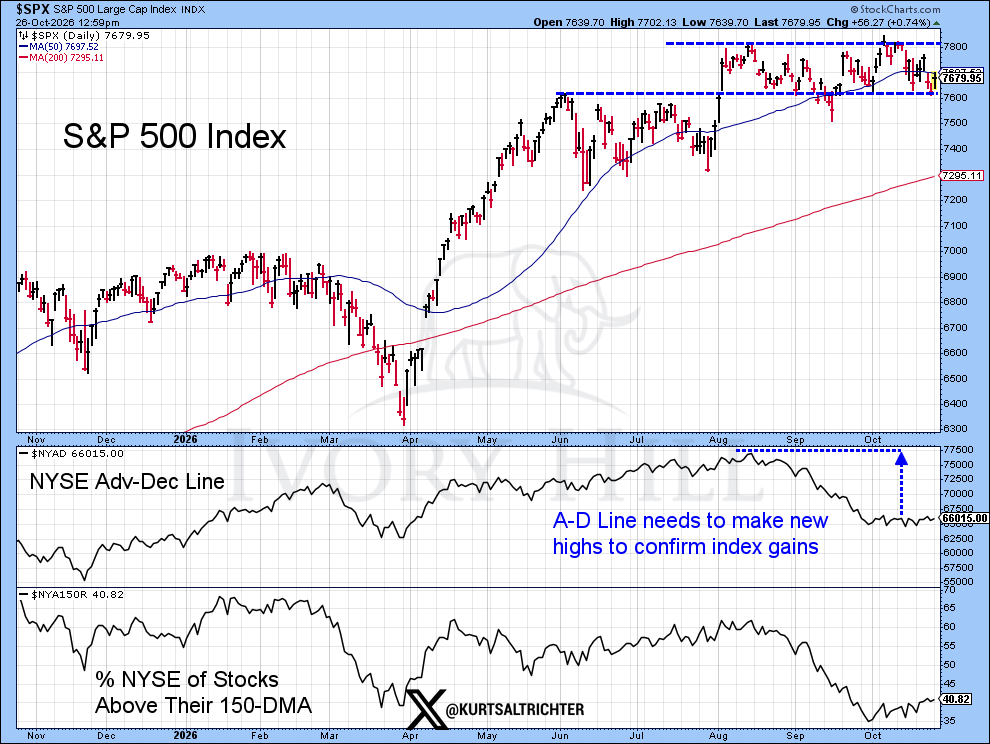
To see past the gum flapping, I like to reference a simple indicator: the percentage of NYSE stocks trading above their 20-day moving average. It counts how many stocks are in a short-term uptrend, so it tells you whether most of the market is moving up or only a few big names are. That number is rising right now, which means buyers are spreading out across more stocks even as the big indices lose their footing. The NYSE Advance-Decline Line backs that up. It keeps a running daily tally of how many stocks rose versus fell, and after sliding from August through September, it has turned up and is inching higher this month. More stocks rising than falling while the index drops means the selling is concentrated in a few large names, and that should keep further declines in the major indices limited in the short term. The A-D Line is still well below its August peak, though, so the S&P 500 needs that line to keep climbing before it can make a lasting move above 7,800.
Markets hate uncertainty, and a midterm election year means a full year of not knowing who will control Congress, which bills will die, and which tax and spending plans will survive. Investors price that fog by paying less for stocks, so midterm years have historically produced deeper selloffs than any other year of a presidential term. Rephrased: Midterm election years have historically produced some of the best buying opportunities going into year-end.
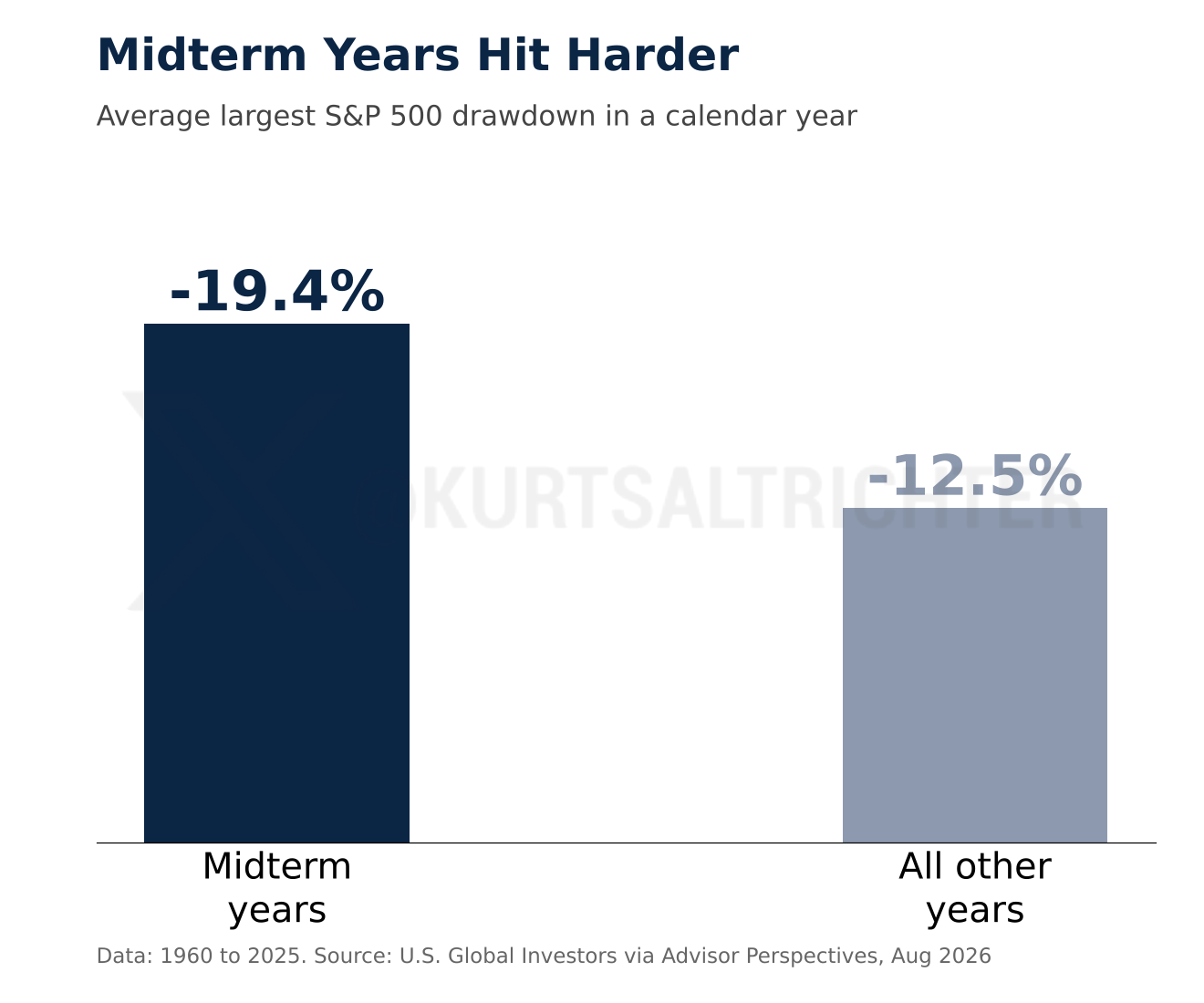
This year has been mild by that standard. The biggest pullback in the S&P 500 came back in Q1 and stayed well short of the typical midterm-year selloff, so 2026 has already skipped the worst of what history predicted. Volatility can still pick up over the next 8 days, but a scare in the final week would come from the same source as every midterm wobble: not knowing the outcome. This is really just the cost of your long-term returns. If you do not need the money tomorrow, then drawdowns don’t matter. If you do need the money tomorrow, then it shouldn’t be in the market in the first place. If anything, if you are a long-term investor, you should want drawdowns to deploy capital into.
The fog lifts the day the votes are counted
Once the results are in, the guessing stops. Companies know which rules they will operate under for the next 2 years; money that sat on the sidelines waiting for clarity comes back in, and stocks have historically responded by climbing. The S&P 500 has finished higher in the 12 months after every midterm election since 1950, and the 6-month window since 1974 has the same perfect record.
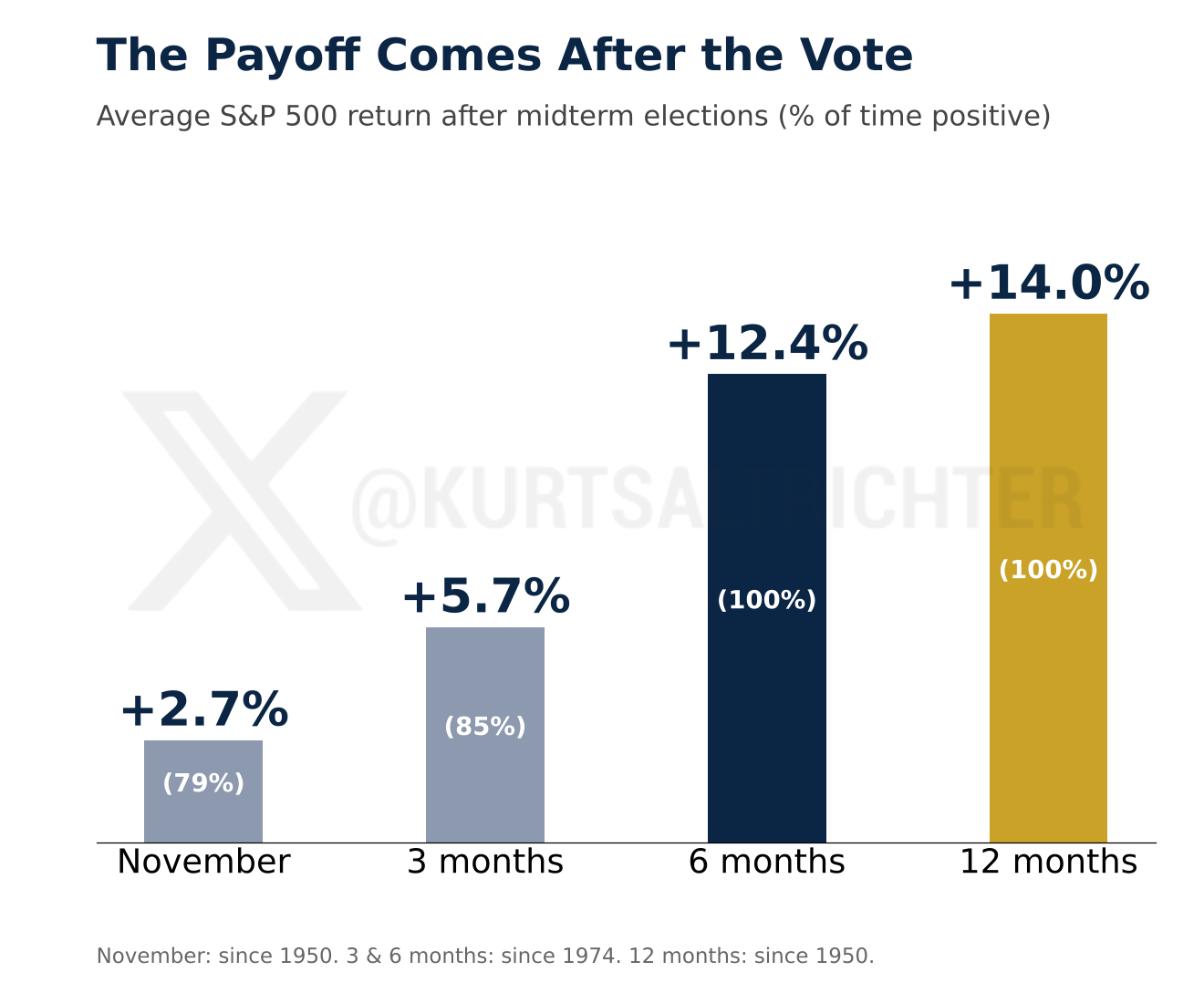
I am not a big believer in trading off the calendar, and you should not buy or sell anything because of what November did in 1962. I show you this history for a different reason: when someone tells you the election is about to wreck the market, the official record says the opposite has been far more common.
Why history is not the whole story
A calendar pattern only works if no other catalysts override it, so here is what actually drives returns from here.
On the plus side, the economy keeps absorbing everything thrown at it, corporate earnings are strong, household balance sheets are in good shape, and AI spending is still pouring money into chips, power, and data centers. Momentum is on our side too, since a market that keeps making new highs tends to pull in buyers who missed the first leg.
On the minus side, rates are high, and the Fed is openly talking about hiking rates. The recent jump in inflation is almost entirely an oil story: the conflict with Iran pushed crude higher, and that flowed straight into gas, shipping, and anything that moves by truck. That is a supply shock, and a rate hike doesn't produce a single barrel of oil, so hiking into it would slow the economy without fixing the real problem. This is the same Fed that spent 2021 calling inflation transitory, so I would not bet my portfolio on its timing now or any other time. The rally is also concentrated in a small group of giant stocks, and valuations are expensive.
If you want to play the outcome
For most of you, the winning move is to stay invested and ignore the noise. For those who want a small, targeted bet on top of a core portfolio, here is how each outcome could shake out, listed from most likely to least likely based on Polymarket odds as of October 26.
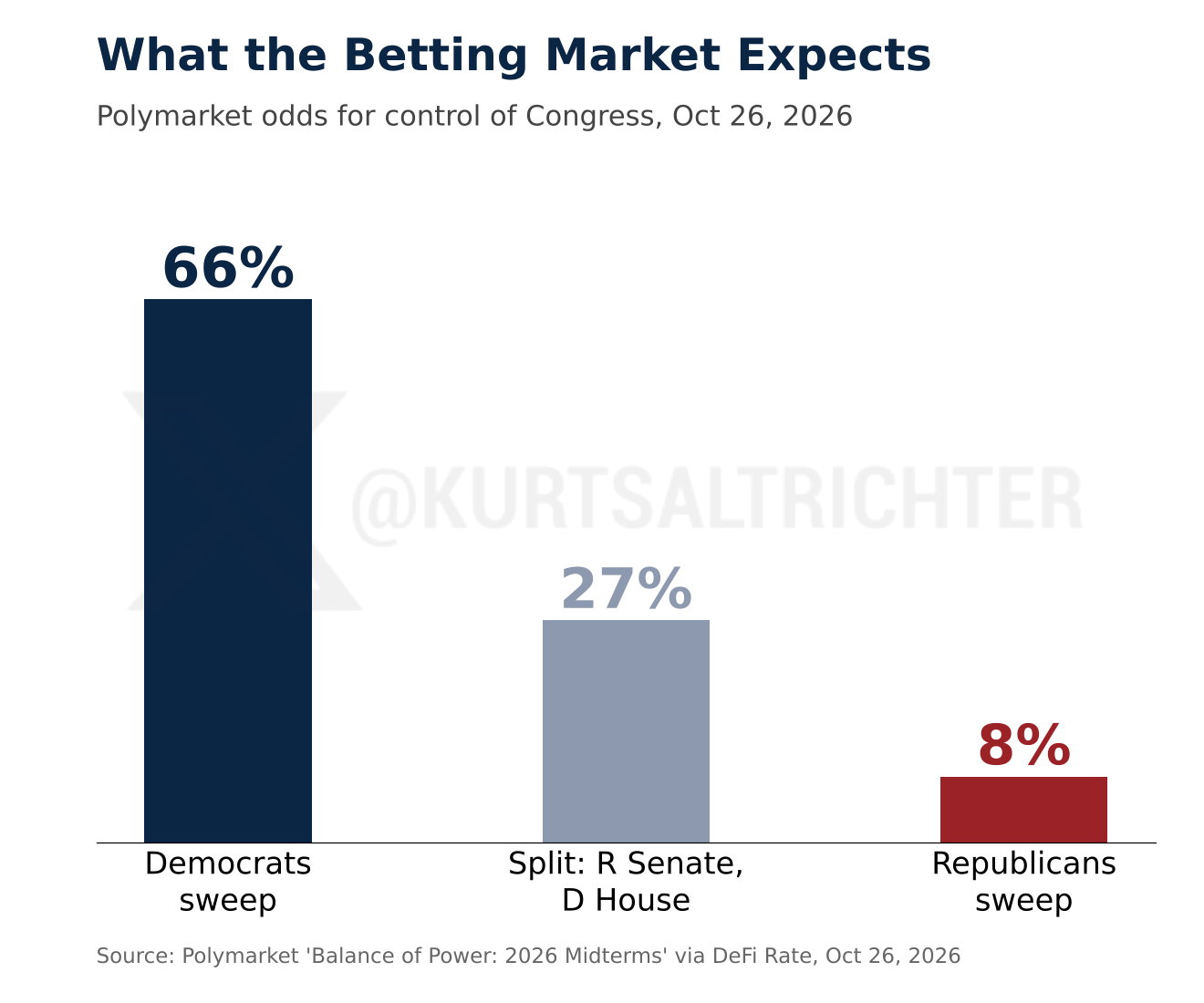
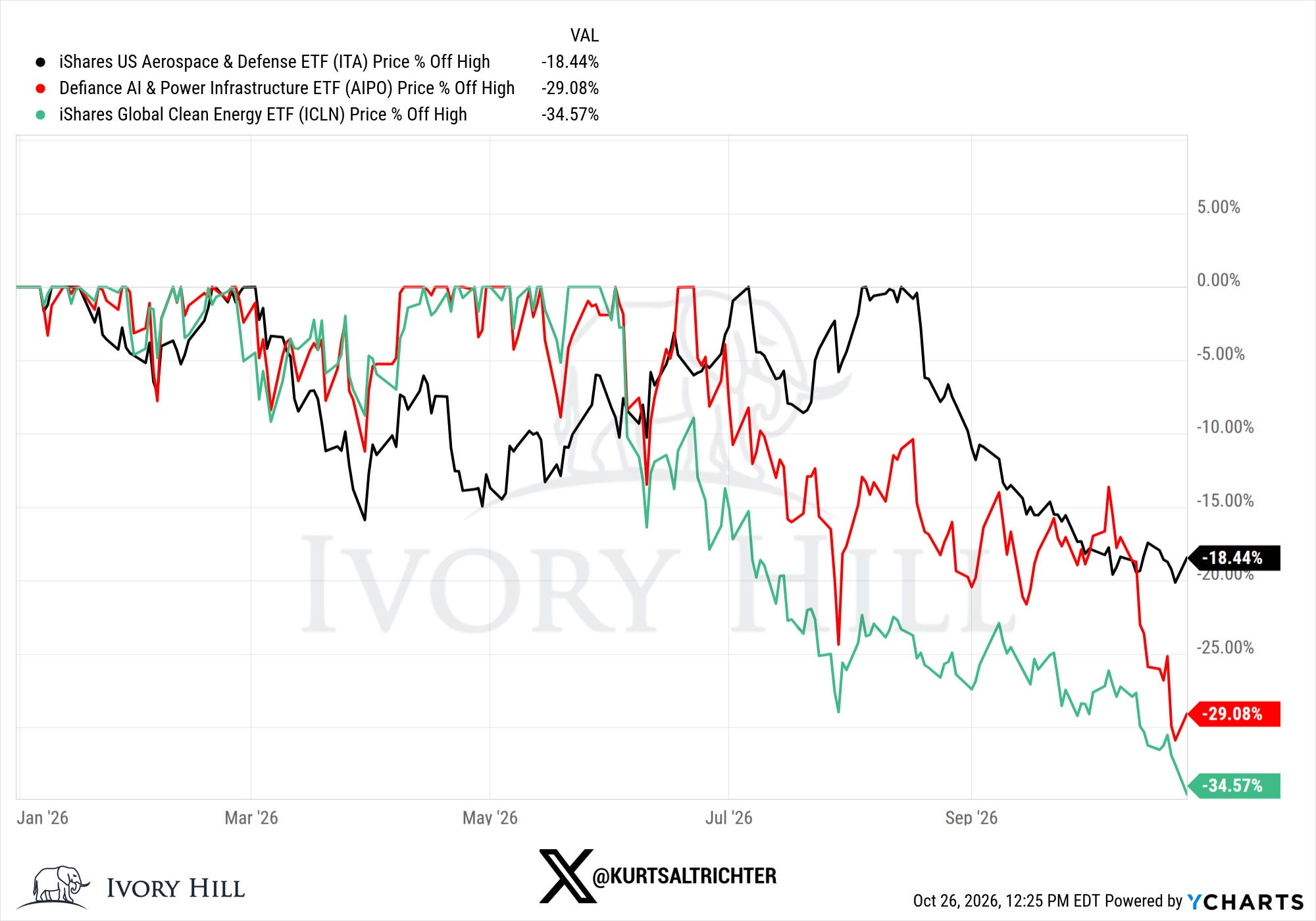
Democrats sweep (the betting favorite). A Democratic Congress would push clean energy mandates, green subsidies, and climate spending, which sends money directly to solar, wind, and hydro companies. Clean energy stocks have actually done well under both Trump terms, so this group does not need a blue wave to work, it just gets a bigger tailwind from one. The iShares Global Clean Energy ETF (ICLN) is the simplest way to own that theme.
Split Congress (Republican Senate, Democratic House). A divided Congress passes very little, but defense is one of the few line items both parties fund every year, and a world with active conflicts keeps that budget growing. The iShares U.S. Aerospace & Defense ETF (ITA) owns the defense contractors and aircraft makers that collect those checks.
Republicans sweep (the long shot). Republican leadership treats AI and data center buildout as a national priority in the race against China, which means faster permitting and more support for the power grid that feeds those data centers. The Defiance AI & Power Infrastructure ETF (AIPO) holds the companies building that grid, power supply, and AI hardware.
Keep any of these small. They are satellite positions, and a wrong call on the election should cost you a little, not a lot.
The bottom line is the votes will be counted, the uncertainty will clear, companies will go back to making money, and the market will move on to the next thing to hyperventilate about. The worst mistake you can make next week is selling a long-term portfolio because of a headline that will be old news by Thanksgiving. Stick to your strategy.
And remember - The one fact pertaining to all conditions is that they will change.
Follow me on X for more updates.
Best regards,
-Kurt
Schedule a call with me by clicking HERE
Kurt S. Altrichter, CRPS®
Fiduciary Advisor | President
Disclosure
The RiskSignal Report is published by Ivory Hill, LLC. All opinions and views expressed in this report reflect our analysis as of the date of publication and are subject to change without notice. The information contained herein is for informational and educational purposes only and should not be considered specific investment advice or a recommendation to buy or sell any security.
The data, models, and tactical allocations discussed in this report are designed to illustrate market structure and positioning trends and may differ from portfolio decisions made by Ivory Hill, LLC or its affiliates. Investing involves risk, including the possible loss of principal. Past performance is not indicative of future results.
Ivory Hill, LLC, and its members, officers, directors, and employees expressly disclaim any and all liability for actions taken based on the information contained in this report.